

Selling a house after someone dies can feel urgent, but the first priority is not choosing a list price. It is confirming who owns the property, who can legally act, and what must be protected while the estate is organized.
A surviving spouse, adult child, named executor, trustee, or other relative may be involved, but those roles do not automatically create the same authority. The correct path depends on how the deed is written, whether the home is in a trust, whether there is a will, and whether a New Hampshire probate estate must be opened.
Families are also making decisions while dealing with grief, belongings, bills, maintenance, and sometimes disagreement. A good plan for selling your home in this situation should reduce pressure, preserve options, and prevent expensive steps from being taken before the right person has authority.
This guide explains the practical sequence for selling a house after someone dies in New Hampshire. It is general information, not legal or tax advice. An estate attorney, tax professional, title professional, lender, insurer, and other specialists may need to address the facts of a particular property.
Table of Contents
Selling a House After Someone Dies: Why Authority Comes First
An ordinary home sale begins with the owner deciding to sell. An estate property may begin with uncertainty about who the owner is now and who can sign a listing agreement, purchase contract, deed, or closing document.
Being a close relative does not automatically provide authority. Being named as executor in a will is important, but the person may still need to open the estate and receive a court appointment before acting for it. A former power of attorney is not a substitute. New Hampshire law states that a power of attorney terminates when the principal dies.
Before the property is marketed, an attorney or title professional should confirm the ownership and signing authority. That step protects the estate, the heirs, the buyer, and the closing.
Step 1: Secure the Home Before Making Sale Decisions
Selling a house after someone dies may take weeks or months to organize. The property still needs active protection during that time, especially when it becomes vacant.
Start by identifying immediate risks:
- Contact the property insurer and explain the change in occupancy.
- Keep mortgage payments, property taxes, association charges, and essential utilities current.
- Maintain heat during cold weather and arrange snow removal, mowing, or basic exterior care.
- Secure doors, windows, garages, sheds, vehicles, documents, medication, firearms, and valuables.
- Forward or collect mail and watch for bills, tax notices, insurance notices, and mortgage correspondence.
- Photograph the rooms and contents before items are removed or distributed.
- Check the home regularly for leaks, frozen pipes, power failures, pests, storm damage, or unauthorized entry.
Do not assume the existing homeowners policy will continue unchanged after the owner dies or after the home becomes vacant. The insurer should explain what notice, occupancy information, or policy changes are required.
In New Hampshire, protecting the heating system and plumbing can be as important as protecting the legal documents. A preventable winter loss can significantly change the estate’s options and the property’s value.
Step 2: Determine How the Property Is Titled
When selling a house after someone dies, the deed is one of the first documents to review. It can help determine whether the property may pass directly to another owner or whether an estate process is likely needed.
Common ownership situations include:
- The deceased person owned the property solely in their own name.
- The deceased person owned an undivided interest as a tenant in common.
- The property was held jointly with a right of survivorship.
- A married couple held the property in a form that includes survivorship rights.
- The property was owned by a revocable or irrevocable trust.
- A recorded transfer-on-death deed names a beneficiary.
- The deed, trust, will, divorce order, or prior estate contains unusual restrictions or unresolved interests.
Not every home automatically becomes a probate asset. A surviving joint owner, trustee, or transfer-on-death beneficiary may receive an ownership interest outside full probate administration. However, the deed and supporting documents should be reviewed before anyone assumes they can sell.
The New Hampshire Judicial Branch explains that when a deceased person owned an asset only in their own name or in common with others, a probate estate administration generally must be opened to handle that asset.
Step 3: Confirm Who Has Legal Authority to Act
The person who manages the sale depends on the ownership and estate structure. Possible decision-makers include:
- A surviving owner whose interest passed by survivorship.
- A trustee acting under the terms of a trust.
- A beneficiary under a valid transfer-on-death deed after the transfer is properly established.
- An executor appointed by the court when there is a will.
- An administrator appointed by the court when there is no will or no executor able to serve.
Selling a house after someone dies should not move into active marketing until the signing authority is clear. The listing agreement should identify the correct seller, and the title and closing professionals should be able to verify the authority that will support the deed.
Families sometimes assume that the person who handled finances before death can continue signing under a durable power of attorney. That is a serious mistake. The authority under the power of attorney ends at death, and the estate, trust, surviving owner, or beneficiary must act through the proper post-death authority.
Step 4: Understand Whether Probate Is Required
Probate is the court process used to appoint the person responsible for the estate, address assets and debts, and distribute property according to a will or New Hampshire intestacy law.
When there is a will, the named executor generally petitions for appointment and submits the required estate documents. The New Hampshire Judicial Branch provides specific guidance for opening an estate with a will. When there is no will, a qualified person may seek appointment as administrator, and the heirs are identified under state law through the estate-without-a-will process.
Selling a house after someone dies does not always require full probate administration. The existence of a will does not mean probate is unnecessary, and the absence of a will does not automatically mean the state takes the house. The deed, beneficiary arrangements, debts, trust documents, and other assets determine the actual process.
An estate attorney can help determine which process applies, who should be appointed, what notices and filings are required, and whether the sale needs consent or court authorization.
Can a House Be Sold Before Probate Is Finished?
Often, yes. The estate does not always need to be completely closed before the real estate is sold. The more important question is whether the proper person has been appointed or otherwise has authority, and whether any required consent or court license has been obtained.
New Hampshire Probate Rule 107 states that no license is required when all heirs or devisees consent to the sale or when the will directs the sale. That does not mean every executor can sell immediately or without review. The will, appointment, title, debts, beneficiaries, and purpose of the sale still matter.
When real estate needs to be sold to pay estate debts or claims, the executor or administrator may need to use the court’s Motion and License to Sell Real Estate to Pay Demands process. The estate attorney and title company should confirm the required path before a listing or purchase contract creates deadlines the estate cannot meet.
Step 5: Contact the Mortgage Servicer, Insurer, and Municipality
The owner’s death does not automatically eliminate the mortgage, tax bill, utility charges, association obligations, or property-maintenance costs.
Contact the mortgage servicer and ask what documentation it requires to communicate with the estate, surviving owner, or successor. The Consumer Financial Protection Bureau explains that proof may include a death certificate, executed will, or letter from the executor, depending on the situation.
Continue making required payments unless the estate attorney, lender, or servicer provides different written direction. Late payments, tax delinquencies, insurance cancellation, or foreclosure activity can reduce the time available to make a thoughtful decision.
Reverse mortgages require prompt attention because different payoff and notice rules may apply after the last borrower dies. Contact the servicer immediately rather than assuming the home can remain unchanged while probate proceeds.
Also identify the municipality, condominium association, homeowners association, private road association, or other organization that sends bills or maintains records affecting the property.
Step 6: Gather Property Records and Establish Value
Selling a house after someone dies is easier when the estate can answer basic property questions before buyers begin asking them.
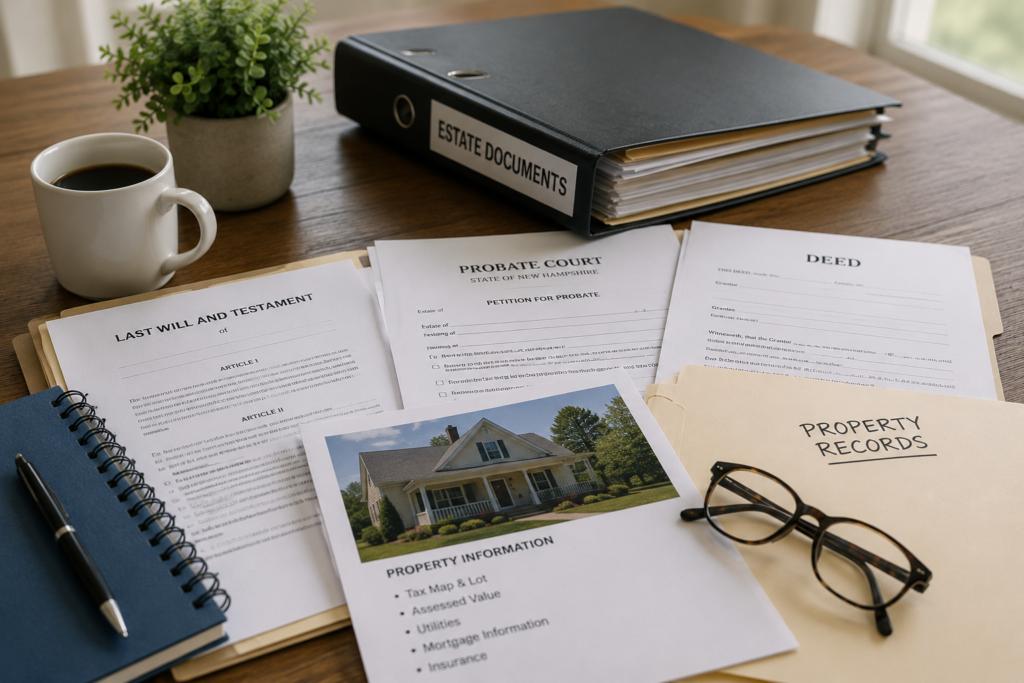
Gather available records such as:
- The current deed and any trust or transfer-on-death documents.
- The death certificate and court appointment documents.
- Mortgage, home equity loan, lien, and payoff information.
- Municipal tax cards, tax bills, and current-use records.
- Surveys, boundary plans, easements, and private road agreements.
- Septic designs, inspection reports, pumping records, and well information.
- Permits, certificates, warranties, invoices, and improvement records.
- Condominium, association, dock, shoreland, or waterfront documents.
- Insurance information and records of prior claims or damage.
- Rental agreements, security deposits, or tenant records, if applicable.
The estate may need more than one type of valuation. A date-of-death appraisal may be important for estate, accounting, or tax purposes. A current comparative market analysis addresses what buyers are likely to pay now. Those values can differ, especially if market conditions or property condition changed after the date of death.
The IRS explains that the basis of inherited property is generally its fair market value on the date of death, subject to exceptions and alternate valuation rules. Because repairs, selling expenses, prior ownership, trusts, and the timing of the sale can affect the tax analysis, the estate should consult a qualified tax professional.
Step 7: Decide What to Do With Personal Belongings
When selling a house after someone dies, cleaning out the home can become the most emotional and time-consuming part of the process. It can also create conflict if items are removed before authority, beneficiary rights, or the estate inventory are understood.
Before discarding, donating, selling, or distributing belongings:
- Confirm who is authorized to make decisions about personal property.
- Photograph rooms, valuable items, and important collections.
- Locate the will, trust, personal property memorandum, safe-deposit information, titles, and financial records.
- Separate documents and items that may be needed for taxes, probate, insurance, or property disclosures.
- Create a written process for family members to identify sentimental items.
- Document estate-sale, donation, storage, hauling, and disposal expenses.
- Clarify what furnishings, equipment, appliances, docks, sheds, tools, or other items may remain with the property sale.
A house does not need to be completely emptied before a real estate professional provides an initial opinion of value. In many cases, it is better to evaluate the property first so the estate does not spend weeks clearing items that could have been handled as part of a broader sale plan.
Step 8: Decide Whether to Repair the Home or Sell It As-Is
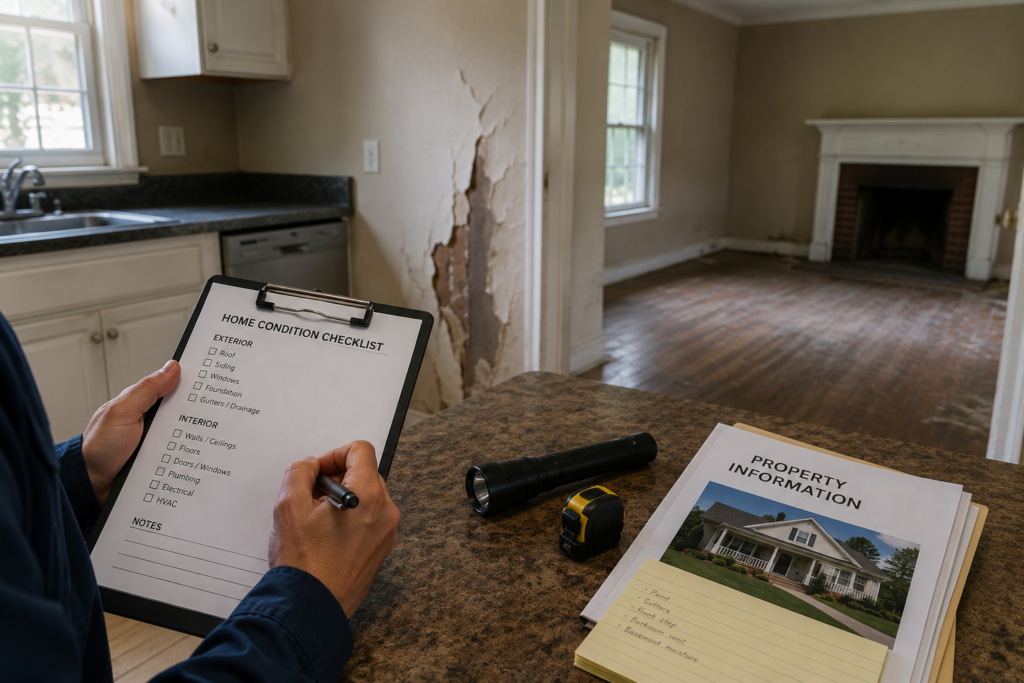
Estate properties often contain deferred maintenance, outdated finishes, partially completed projects, or systems the current decision-makers know little about. That does not automatically mean the home should be renovated.
The estate should compare the full repair cost with the likely effect on marketability, financing, buyer confidence, sale price, timing, and net proceeds. A useful priority is:
- Damage first, including active leaks, unsafe conditions, and problems that can worsen.
- Deferred maintenance second, including visible neglect and incomplete minor repairs.
- Optional improvements last, including design changes and major renovations.
Our guide to deciding whether to sell the property as-is or make repairs explains how to evaluate that decision without assuming every dollar spent will be recovered.
Selling as-is does not mean ignoring known conditions, concealing defects, or refusing all inspections. It generally means the estate is marketing the property in its current condition and will evaluate offers with that condition in mind. Applicable New Hampshire notifications, disclosures, and contract obligations still apply.
An initial property review can help the estate identify which work might prevent a financing or insurance problem, which inexpensive steps could improve presentation, and which projects are unlikely to justify the cost or delay.
Step 9: Create One Written Sale Plan for the Estate and Heirs
Selling a house after someone dies can bring several family priorities into the same decision. One person may want the highest possible price, another may want a fast sale, and another may want to keep the property. Informal conversations are not enough when the estate is spending money and accepting contractual obligations.
Create a written plan that addresses:
- Who has legal authority to make and sign decisions.
- Who will communicate with the attorney, agent, lender, insurer, and vendors.
- Whether the goal is to keep, rent, or sell the property.
- Whether the property will be sold as-is or prepared for market.
- The budget for carrying costs, repairs, cleanout, storage, and professional services.
- How sale price, offer terms, timing, and risk will be evaluated.
- How expenses and net proceeds will be documented.
- How family members will receive updates and provide any required consent.
A real estate agent can explain market conditions, likely buyer concerns, preparation options, and offer terms. The agent cannot resolve legal disputes among heirs or determine probate rights. When disagreement affects authority or consent, the estate needs legal guidance before entering a contract.
Selling an Estate Property From Outside New Hampshire
Selling a house after someone dies is often managed by a relative who lives in another state. Most of the real estate work can be coordinated remotely, but the property still needs reliable local oversight.
An out-of-state executor, trustee, heir, or owner may need help with:
- Regular property checks and emergency access.
- Contractors, cleaners, movers, estate-sale companies, and haulers.
- Winterization, snow removal, mowing, utility access, and alarm systems.
- Septic, well, water, roof, heating, or other property evaluations.
- Municipal, deed, probate, association, and permit research.
- Electronic signatures, mobile notaries, document delivery, and closing logistics.
- Coordinating which personal property remains and which items are removed.
A local plan is especially important when selling a house after someone dies and the decision-maker lives outside New Hampshire. Establish authority and a written plan first, then use one local point of contact to coordinate the property work and keep records for the estate.
Common Problems That Delay an Estate Home Sale
Selling a house after someone dies is less likely to be delayed when title, authority, property condition, bills, and family decisions are addressed before the property reaches the market.
- No one has confirmed the deed or ownership structure.
- The named executor has not been appointed by the court.
- A family member is trying to act under an expired power of attorney.
- The estate does not know whether heir consent or a court license is required.
- The mortgage servicer or insurer has not been notified.
- Personal belongings have not been inventoried or family members disagree about them.
- The home is vacant, uninsured, unheated, or not being checked.
- Unknown liens, unpaid taxes, Medicaid claims, association balances, or title issues appear late.
- The property has septic, well, private road, permit, flood, shoreland, or boundary complications.
- The estate begins renovations before comparing cost, timing, and likely return.
- The listing is launched before all required decision-makers agree on price and terms.
Many of the general costly home-selling mistakes become more serious in an estate sale because the owner, records, and decision-makers may not all be in the same place.
Estate Property Sale Checklist
- Secure the property and notify the insurer.
- Locate the deed, will, trust, transfer-on-death deed, and death certificate.
- Confirm whether a probate estate must be opened.
- Obtain and verify the executor, administrator, trustee, surviving owner, or beneficiary’s authority.
- Contact the mortgage servicer and keep required expenses current.
- Gather tax, title, septic, well, permit, association, and improvement records.
- Document the condition and contents of the home.
- Obtain any needed date-of-death appraisal and a current market analysis.
- Decide whether to keep, rent, repair, or sell the home as-is.
- Create one written decision and communication plan for the estate and heirs.
- Confirm consent or court approval requirements before accepting an offer.
- Plan the cleanout, showing access, closing, and distribution of proceeds.
Frequently Asked Questions
Can you list a house immediately after someone dies?
Not necessarily. The deed, trust, survivorship rights, will, probate status, and court appointment determine who can authorize the listing. A property can be evaluated before every issue is complete, but the correct seller and signing authority should be confirmed before a listing agreement or purchase contract is executed.
Does a will avoid probate for the house?
Not automatically. A will directs how probate assets should be handled, but property owned solely by the deceased may still require estate administration. Property that passes through survivorship, a trust, or a valid transfer-on-death deed may follow a different process.
Can an executor sell the house before probate is closed?
Often, an appointed executor can sell before the estate is fully closed, but the exact authority depends on the will, heir or devisee consent, estate debts, New Hampshire probate rules, and any required court license. The estate attorney and title company should confirm the requirements before the property is placed under contract.
Can a person use a power of attorney to sell after the owner dies?
No. New Hampshire law provides that a power of attorney terminates when the principal dies. The surviving owner, trustee, beneficiary, executor, or administrator must act under the authority that applies after death.
Does the mortgage disappear when the homeowner dies?
No. The loan and lien remain connected to the property. The estate or successor should contact the servicer, provide the requested proof of authority or ownership, and keep required payments current while deciding whether the home will be kept, refinanced, or sold.
Should an inherited home be cleaned out before calling a Realtor?
Usually, an initial property review can happen before the house is empty. Calling earlier can help the estate decide what should remain, what needs professional removal, whether an estate sale makes sense, and whether repairs are worth completing.
Can an estate sell a house as-is?
Yes, an estate can generally market a home in its current condition, subject to the authority to sell, applicable disclosure and notification duties, and the purchase contract. Buyers may still conduct inspections and account for condition in their offers.
Will the heirs owe capital gains tax when the house is sold?
Possibly, but the result depends on ownership, date-of-death value, sale price, improvements, expenses, trust or estate structure, and other tax facts. Inherited property generally receives a basis tied to fair market value at death, subject to exceptions. The estate and beneficiaries should obtain tax advice rather than estimating the result from the original purchase price.
Need Help Evaluating an Estate Property in New Hampshire?
Selling a house after someone dies requires coordination between the people handling the estate and the professionals handling the legal, financial, property, and real estate details.
Woods & Water Realty can help you evaluate the property’s current market position, likely buyer concerns, as-is and repair options, local contractors and service needs, showing logistics, and a practical sale timeline. We can also coordinate with the estate’s attorney, title company, lender, and other professionals while staying within the real estate role.
There is no pressure and no obligation to list. An estate property review can help the family understand the home’s condition, likely value, preparation choices, and next steps before spending money or committing to a sale.
This article provides general real estate information and is not legal, probate, estate-planning, tax, lending, insurance, title, inspection, or accounting advice. Ownership, authority, court requirements, creditor claims, tax treatment, and sale procedures depend on the facts of the estate and property. Consult the appropriate licensed professionals before acting.