

Trying to decide whether to sell a house as-is in New Hampshire or complete repairs first can be one of the hardest parts of preparing for a sale. Sellers often worry that leaving a problem untouched will reduce the price, but they also do not want to spend thousands on work that buyers may not value.
The answer is rarely “repair everything” or “do nothing.” The better approach is to rank the work by urgency and probable effect on the sale: damage first, deferred maintenance second, and optional improvements last.
That order helps separate repairs that may protect the property or preserve the buyer pool from projects that are mostly cosmetic. It also keeps the seller focused on likely net proceeds rather than the amount spent.
Before making a major investment in selling your home, ask a trusted local Realtor to compare the property with current competition, identify issues buyers are likely to notice, and estimate whether the work is likely to improve marketability or produce a reasonable return. Get that guidance before you authorize the work.

Table of Contents
What Does Selling a House As-Is Actually Mean?
Selling a property as-is generally means the seller is offering it in its current condition and does not intend to make repairs simply because a buyer requests them. It can reduce uncertainty about the seller’s willingness to complete work, but it is not a magic phrase that removes every responsibility or risk.
The purchase-and-sale agreement still controls the parties’ rights. Depending on the contract, a buyer may still conduct inspections, terminate under an inspection provision, renegotiate, or ask for a credit. A lender or insurer may also require certain conditions to be corrected before the transaction can close.
An as-is sale also does not automatically eliminate disclosure obligations. For example, New Hampshire disclosure requirements for private water and sewage systems require certain information to be provided in writing before the purchase-and-sale contract is executed. Property-specific legal questions should be reviewed with the appropriate attorney.
In practice, “as-is” is a strategy, not a complete transaction plan. The seller still needs to decide how to price the condition, what information to gather, which buyer pool is likely to respond, and whether any issue should be addressed before the property reaches the market.
The 3 Priorities Before You Sell a House As-Is in New Hampshire
A useful way to evaluate repairs is to place every possible project into one of three categories:
Damage > Deferred Maintenance > Improvements
The order matters. Damage can become more expensive or affect safety, financing, and insurability. Deferred maintenance can create a broad impression of neglect. Improvements are usually optional and should be judged by the likely return, not personal preference.
Priority 1: Address Active Damage and Safety Concerns
Damage is different from an outdated finish. It involves a condition that is active, worsening, unsafe, or likely to cause additional deterioration.
Examples may include:
- Active roof or plumbing leaks
- Water intrusion and the moisture source behind it
- Rotting structural or exterior components
- Unsafe stairs, decks, steps, or railings
- Nonfunctioning heat, plumbing, or electrical components
- Broken windows or exterior openings that allow weather inside
- Septic or drainage problems that are actively affecting the property
- Major hazards identified by a qualified professional
Ignoring active damage can allow the condition to spread while the home is listed. It can also create a larger buyer objection than the repair itself. A visible water stain, for example, may cause buyers to assume the worst until the source is identified and documented.
Not every problem must be repaired before listing, but active damage should be evaluated first. At minimum, the seller should understand the cause, obtain professional guidance when needed, and decide whether the best strategy is repair, disclosure, pricing, or marketing the property to a buyer prepared to take on the work.
Priority 2: Correct Deferred Maintenance
Deferred maintenance includes work that should have been completed as part of ordinary ownership but has been postponed. The condition may not be actively damaging the property, yet it can make the home feel neglected.
Common examples include:
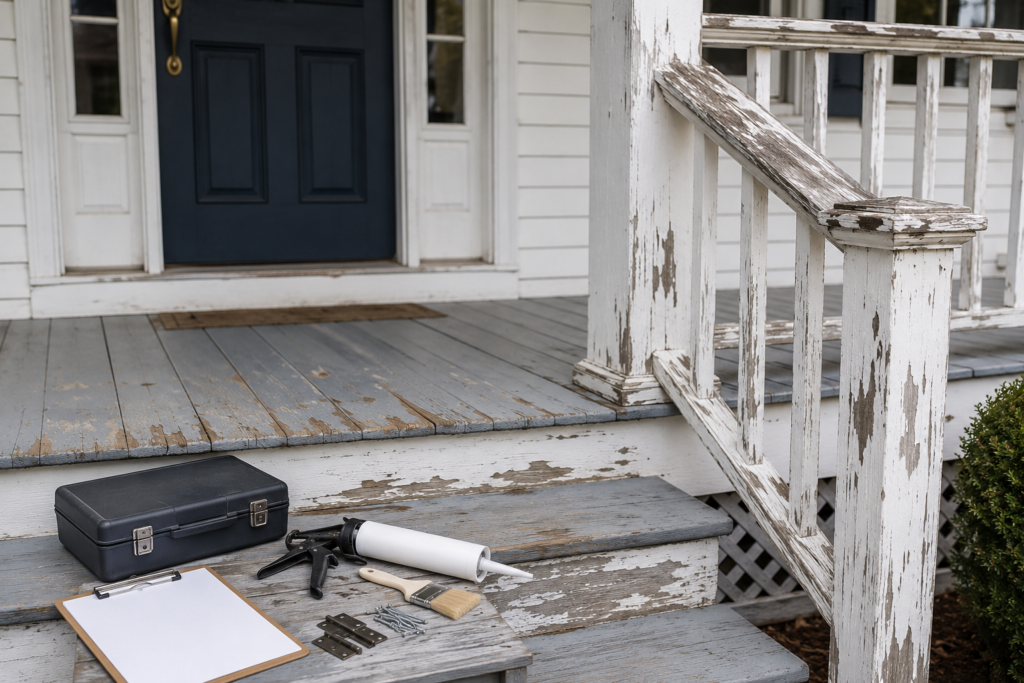
- Peeling or heavily worn paint
- Failed caulking and weathered exterior trim
- Loose door handles, cabinet hardware, or fixtures
- Damaged screens and sticking doors
- Burned-out bulbs and broken light fixtures
- Small unfinished patches or incomplete projects
- Overgrown landscaping and blocked walkways
- Worn flooring that looks dirty or damaged
- Heating equipment or systems that are overdue for routine service
One minor issue is rarely decisive. The problem is accumulation. When buyers notice ten small items, they may assume there are ten more they cannot see. That changes the way they evaluate the entire property.
Deferred maintenance is often where targeted pre-listing work produces the clearest benefit. Many items are relatively inexpensive, improve the photographs, reduce buyer distractions, and help the home feel cared for without turning the preparation process into a renovation.
Priority 3: Be Cautious With Improvements
Improvements are optional upgrades intended to make the home newer, more attractive, or more functional. Examples include replacing a usable kitchen, remodeling a bathroom, installing new flooring throughout the home, finishing a basement, or adding premium fixtures.
These projects can improve value, but sellers should not assume that every dollar spent will be returned at closing. The buyer may prefer a different style, the work may take longer than expected, and the home may already be competitive in its current condition.
The 2025 Cost vs. Value Report compares remodeling costs with the value retained at resale. Its findings reinforce an important point: returns vary significantly by project, and exterior projects generally performed better than discretionary interior remodels. National averages are useful context, but they do not replace a local comparison of your property, price range, and likely buyer.
Before beginning an improvement, ask whether it will solve a real buyer objection, improve the home’s competitive position, or simply make the property more appealing to the current owner. Work completed for personal enjoyment can be worthwhile while you live there, but the calculation is different when the goal is an immediate sale.
Cleaning and Presentation Are Not the Same as Repairs
Cleaning, decluttering, basic landscaping, and improving lighting deserve their own category. These tasks do not repair a defect or modernize the home, but they can strongly influence first impressions and photography.
A home can be dated and still show well. Buyers can often accept older cabinets, flooring, or fixtures when the property is clean, organized, bright, and clearly maintained. They are less likely to overlook dirt, odors, crowded rooms, or belongings that prevent them from understanding the space.
The preparation steps in how to sell your home fast can help improve presentation without committing to a major remodel.
Presentation work is often the best place to start because it improves the way every other feature is experienced. It also gives the Realtor and seller a clearer view of which remaining issues truly need attention.
Why a Professional Repair Quote Costs More Than Labor and Materials
Homeowners sometimes estimate a project by adding the retail cost of materials to the hourly wage they believe a worker earns. A legitimate contractor’s price normally reflects much more than those two numbers.
The full quote may account for:
- Employee wages or subcontractor charges
- Employer payroll taxes when the contractor has employees
- Self-employment taxes for independent tradespeople
- Workers’ compensation and liability insurance
- Tools, vehicles, fuel, and equipment
- Permits, disposal, delivery, and cleanup
- Office overhead, estimating time, and scheduling
- Warranty risk and business profit
Under IRS employment tax guidance, employers generally must withhold Social Security and Medicare taxes from employee wages and pay the employer share. The IRS also explains that independent contractors are generally self-employed and handle their own tax obligations under IRS guidance on independent contractors.
The homeowner is usually not the contractor’s employer. The practical point is that taxes, insurance, overhead, and business risk are part of what it costs to provide professional work. A project that appears inexpensive when reduced to materials and hourly pay may cost substantially more when completed legally, safely, and on schedule.
That is why sellers should obtain real estimates before assuming a repair will produce a return. The decision should be based on the full project cost, not a rough material calculation.

How to Compare Repair Costs With the Likely Return
The right comparison is not simply repair cost versus expected increase in sale price. Repairs can affect several parts of the transaction at once.
Consider whether the work may:
- Prevent additional damage while the home is on the market
- Reduce a buyer’s tendency to overestimate the problem
- Expand the pool of buyers who can obtain financing or insurance
- Improve photography and showing appeal
- Reduce the likelihood of a large inspection request
- Shorten market time and reduce carrying costs
- Improve the sale price enough to exceed the total cost of the work
A hypothetical $7,500 repair may be worthwhile if buyers would otherwise discount the property by $20,000 or if the condition prevents common financing. A $35,000 cosmetic renovation may be a poor investment if it adds only modest value and delays the listing for two months.
The calculation should also include the risk of the project itself. Contractor availability, hidden damage, permit requirements, material delays, and change orders can increase the cost or push the listing into a less favorable season.
A local Realtor cannot guarantee a return, but an experienced agent can compare your home with recent sales and current competition, explain what buyers in that price range expect, and identify where buyers are likely to discount the property by more than the actual cost of a repair.
When It May Make Sense to Sell a House As-Is in New Hampshire
Selling as-is can be a reasonable strategy when the cost, time, or risk of repairs is greater than the probable benefit.
Situations where it may make sense include:
- The property needs extensive renovation and is likely to attract contractors, investors, or cash buyers
- The seller lacks the cash needed to complete the work
- The home is part of an estate and the decision-makers prefer a simpler sale
- The seller lives out of state and cannot effectively manage contractors
- The work would delay the sale beyond the seller’s timeline
- The likely buyer would renovate the property regardless of what the seller completes
- The value is driven primarily by land, location, waterfront, or redevelopment potential
- Reliable contractors are unavailable within the required timeframe
The as-is price must still reflect the condition. Buyers who accept substantial work usually expect compensation for the cost, uncertainty, inconvenience, and risk they are taking on. Marketing should clearly identify the property’s strengths while giving buyers enough information to evaluate the condition honestly.
When Repairs Before Listing Usually Deserve Strong Consideration
Repairs often deserve stronger consideration when they are limited in scope and likely to remove a major objection.
Examples include:
- Stopping an active leak and repairing the resulting damage
- Correcting a safety issue that will be obvious during showings
- Restoring a system or fixture that should be functional
- Finishing an incomplete project that makes the home look abandoned
- Repairing exterior deterioration that dominates the first impression
- Addressing a condition likely to interfere with financing or insurance
- Completing inexpensive work that buyers are likely to price as a much larger problem
The goal is to avoid the pattern described in our guide to costly mistakes New Hampshire home sellers make: several small condition problems can combine into a much larger impression of neglect.
Repairs should be completed properly. Rushed or visibly amateur work can create a new concern, especially when the repair involves water, electrical systems, structure, roofing, septic systems, or other areas where buyers expect professional documentation.
Repair the Problem, Offer a Credit, or Adjust the Price?
A seller may have more than one way to address a condition. The best option depends on timing, financing, the buyer pool, and the seller’s available funds.
Complete the repair before listing
This can improve presentation, reduce uncertainty, and allow the seller to control the scope and contractor. It works best when the issue is clearly defined and the project can be completed before photography.
Obtain estimates and disclose the condition
Written estimates can help buyers understand the likely cost instead of guessing. The seller can then price the property with the condition in mind without taking on the project. Estimates should be current, clear, and from appropriate professionals.
Offer a buyer credit
A credit can allow the buyer to choose the contractor or finish, but the contract and lender must permit it. A credit may not solve a condition that must be corrected before financing or insurance can be approved.
Adjust the asking price
A lower price can recognize the condition, but buyers may still request additional concessions after inspections. The listing strategy should make clear how the condition was considered without overstating or minimizing it.
Market the home to a different buyer pool
A property with extensive work may be better positioned for buyers who have cash, renovation experience, or financing designed for rehabilitation. That buyer pool may be smaller and may expect a larger discount, but it can be more realistic than trying to present the property as move-in ready.
Questions to Ask a Realtor Before Spending Money
A trusted Realtor should not simply hand you a generic repair checklist. The recommendations should be tied to your property, market, timeline, and financial goals.
Ask questions such as:
- How does my home’s current condition compare with competing listings?
- Which issues are buyers most likely to notice in photographs or showings?
- Will any condition reduce the pool of financed or insured buyers?
- Are buyers likely to overestimate the cost of this problem?
- Would a written estimate be enough, or is repair more likely to protect the sale?
- Which work improves marketability but is unlikely to increase the sale price?
- What is the probable as-is price range compared with the prepared-market range?
- How will the time needed for repairs affect carrying costs and the ideal listing date?
- Which projects should be avoided because the likely return is too uncertain?
The Realtor’s role is not to diagnose defects or replace a contractor, engineer, inspector, attorney, or tax professional. The Realtor should help connect the condition of the property to buyer behavior, pricing, marketability, and transaction risk.
A Practical Pre-Listing Decision Process
Use the following sequence before authorizing major work:
- Identify active damage, safety concerns, and nonfunctioning systems.
- List visible deferred maintenance and incomplete projects.
- Separate optional improvements from actual repairs.
- Ask a local Realtor to compare the home with current competition and recent sales.
- Obtain professional estimates for the work that may materially affect the sale.
- Compare the full project cost with the likely effect on price, buyer pool, timing, and risk.
- Choose a strategy: repair, obtain estimates, offer a credit, adjust the price, or market as-is.
- Prepare a backup plan in case the project uncovers additional work or delays the listing.
Sellers who are also purchasing another property should coordinate this decision with their plan for buying and selling a home at the same time. Repair costs, listing delays, and uncertain proceeds can affect the financing and timing of the next purchase.
Frequently Asked Questions
Can I sell a house as-is in New Hampshire?
Yes. A property can be offered in its current condition, but the purchase-and-sale agreement determines the parties’ rights. An as-is description does not automatically prevent inspections, eliminate applicable disclosure requirements, or override lender and insurance conditions.
Does selling as-is mean I should not repair anything?
No. A seller can market a property as-is after completing selected repairs. It may make sense to address active damage, safety concerns, or visible deferred maintenance while declining optional improvements or future buyer requests.
What repairs should I prioritize before selling?
Prioritize active damage and safety concerns first, deferred maintenance second, and optional improvements last. The exact recommendation should account for the home’s price range, condition, competition, likely buyer, financing concerns, and the full cost of the work.
Should I remodel the kitchen before listing?
Usually not without a property-specific market analysis. A dated but clean and functional kitchen may be acceptable to buyers. A large remodel can delay the sale, exceed the expected return, and introduce choices that do not match buyer preferences.
Is it better to give the buyer a credit than complete repairs?
Sometimes. A credit may be useful when the buyer wants control over the work, but it must be allowed by the contract and lender. Some conditions may need to be corrected before financing or insurance can be approved, so a credit is not always a substitute for repair.
How do I know whether a repair will increase my sale price?
No one can guarantee a specific return. Compare the full project cost with the likely effect on buyer interest, financing, inspections, market time, and sale price. Recent sales and current competing listings are more useful than a generic national percentage alone.
Before You Spend Thousands Preparing to Sell
The best time to decide what to repair is before contractors are scheduled and before the home is listed.
Woods & Water Realty can help you separate active damage from deferred maintenance and optional improvements, compare the likely as-is and prepared-market positions, and identify projects buyers may not value enough to justify the cost.
A pre-listing property review can help you make a deliberate decision about repairs, pricing, timing, and marketing without committing to unnecessary work or an immediate listing.
This article provides general real estate information and is not legal, tax, construction, engineering, lending, insurance, environmental, or inspection advice. Property conditions, contract terms, disclosure duties, and financing requirements vary. Consult the appropriate licensed professionals for advice about a specific property or transaction.