

Selling a house in New Hampshire in 2026 can still produce an excellent result, but a strong housing market does not protect sellers from avoidable mistakes.
In May 2026, New Hampshire REALTORS reported that the statewide median sale price for a single-family home reached a record $576,000. Buyer demand remained strong, but available inventory had also increased compared with the previous year. The state still had only 2.3 months of housing supply, which remained well below what is generally considered a balanced market.
At the same time, Freddie Mac reported that the average 30-year fixed mortgage rate was 6.58% as of July 23, 2026. Buyers are still purchasing homes, but higher prices and borrowing costs make them more sensitive to condition, value, and avoidable expenses.
That combination creates an important opportunity for sellers. A properly prepared and positioned home can attract strong interest, while an overpriced or poorly presented property may lose momentum. A thoughtful strategy for selling your home should address pricing, preparation, marketing, access, documentation, and offer terms before the property reaches the market.
Some mistakes simply create inconvenience. Others can result in fewer showings, longer market time, avoidable price reductions, difficult negotiations, or thousands of dollars in lost proceeds.
Table of Contents
- Why selling a house in New Hampshire requires a strong launch
- Mistake 1: Pricing the home based on what you need
- Mistake 2: Underestimating Cleaning, Clutter, and Odors
- Mistake 3: Ignoring small repairs or completing the wrong renovations
- Mistake 4: Treating photography and marketing as an afterthought
- Mistake 5: Making the home difficult to show
- Mistake 6: Waiting until after an offer to investigate property issues
- Mistake 7: Choosing an offer based only on its price
- New Hampshire home seller checklist
- Frequently asked questions

Why Selling a House in New Hampshire Requires a Strong Launch
The first days on the market are often the period when a home receives its greatest concentration of attention.
Buyers who have already been searching receive alerts when a new property is listed. Local agents review new inventory for active clients. The listing is distributed across the MLS and major home-search websites. This creates an initial window in which the property is new, relevant, and likely to receive its highest level of online exposure.
Selling a house in New Hampshire successfully does not require creating artificial urgency or deliberately underpricing every property. It does require launching with a price, presentation, and marketing strategy that gives qualified buyers a reason to act.
A seller can make adjustments later, but a price reduction cannot fully recreate the excitement of a well-positioned new listing. This is why important decisions should be made before the property appears online.
Mistake 1: Pricing the Home Based on What You Need
One of the most expensive mistakes is choosing a listing price based on the amount the seller wants or needs to receive.
A homeowner may need a certain amount to:
- Purchase another home
- Pay off a mortgage or home equity loan
- Complete a divorce settlement
- Fund retirement
- Pay moving expenses
- Settle an estate
- Recover the cost of improvements
Those financial needs are important to the seller, but they do not determine market value.
Buyers compare the home with recent sales, pending transactions, current listings, property condition, taxes, location, and the alternatives available within their price range. They do not know how much the seller spent on renovations or how much the seller needs for the next move.
Online estimates and municipal assessments should not be treated as listing prices either. Automated valuations may not accurately account for condition, views, water access, private roads, outbuildings, recent improvements, or differences between nearby micro-markets. An assessed value is created for taxation and may not reflect what buyers will pay in the current market.
When selling a house in New Hampshire, pricing should be based on the property’s actual competitive position. New Hampshire is not one uniform market. Buyer activity can differ by town, price range, property type, school district, lake, association, and even road access.
Why overpricing can cost more than expected
Some sellers list high because they believe it gives them room to negotiate. The risk is that qualified buyers may never make an offer.
An overpriced home can experience:
- Fewer online clicks
- Fewer showing requests
- A longer time on the market
- Multiple price reductions
- Reduced buyer urgency
- Questions about why the property has not sold
- Less leverage when an offer finally arrives
The goal is not to choose the lowest possible price. The goal is to identify a price and launch strategy that creates strong buyer interest without sacrificing the seller’s position.
Mistake 2: Underestimating Cleaning, Clutter, and Odors
Cleaning does not change the home’s square footage, lot size, or number of bedrooms, but it can dramatically affect how buyers perceive those features.
Cluttered rooms often appear smaller. Overfilled closets suggest limited storage. Dirty windows reduce natural light. Pet hair, smoke, or strong odors can distract buyers from the property’s positive features.
Common presentation problems include:
- Crowded kitchen countertops
- Excess furniture
- Full closets
- Dirty windows
- Stained carpeting
- Pet hair
- Litter-box odors
- Smoke odors
- Musty basements
- Dirty bathrooms
- Overflowing garages
- Personal belongings covering important features
When selling a house in New Hampshire, sellers should pay particular attention to basements, entry areas, mudrooms, heating areas, and seasonal storage spaces. Buyers expect New Hampshire homes to accommodate boots, coats, tools, recreational equipment, heating systems, and winter storage.
The goal is not to remove every sign that someone lives in the home. The goal is to make each space understandable.
Buyers should be able to see:
- How furniture fits
- How rooms connect
- How much storage is available
- Which features are included
- Whether the home appears well maintained
- How they might use the property themselves
Do not try to cover odors
Strong candles, plug-ins, and air fresheners can make buyers wonder what is being concealed.
If an area smells damp or musty, identify the source rather than covering it. If pets live in the home, clean fabrics, flooring, bedding, and areas where odors may have accumulated. A neutral-smelling home is usually better than a heavily scented one.
Mistake 3: Ignoring Small Repairs or Completing the Wrong Renovations
Sellers can lose money in two opposite ways.
The first is ignoring visible maintenance issues that would be relatively inexpensive to correct. The second is investing heavily in renovations that buyers may not value enough to justify their cost.
Small problems can create a larger impression of neglect. A buyer who notices several minor defects may begin wondering what larger problems have not been addressed.
Before selling a house in New Hampshire, look for items such as:
- Dripping faucets
- Loose railings
- Broken cabinet hardware
- Missing outlet covers
- Damaged screens
- Sticking doors
- Burned-out lightbulbs
- Unfinished wall patches
- Peeling exterior trim
- Rotting deck boards
- Leaking plumbing fixtures
- Broken steps
- Missing handrails
- Incomplete projects
These issues do not always require expensive work. Many can be corrected through basic maintenance, touch-ups, or targeted repairs.
Avoid renovating without a clear strategy
A new kitchen or bathroom may improve a home, but completing a large renovation immediately before listing is not automatically profitable.
Before beginning an expensive project, consider:
- The likely buyer for the property
- The home’s expected price range
- Comparable homes currently for sale
- Neighborhood expectations
- The project’s total cost
- How long the work will take
- Whether the project can be completed before photography
- Whether buyers may prefer different finishes
A seller may be better served by completing repairs, improving lighting, touching up paint, cleaning the exterior, refreshing landscaping, and finishing incomplete work.
The right question is not simply, “Will this make the home nicer?”
The better question is:
Will this improvement meaningfully increase buyer interest, reduce an objection, or improve the seller’s likely net proceeds?
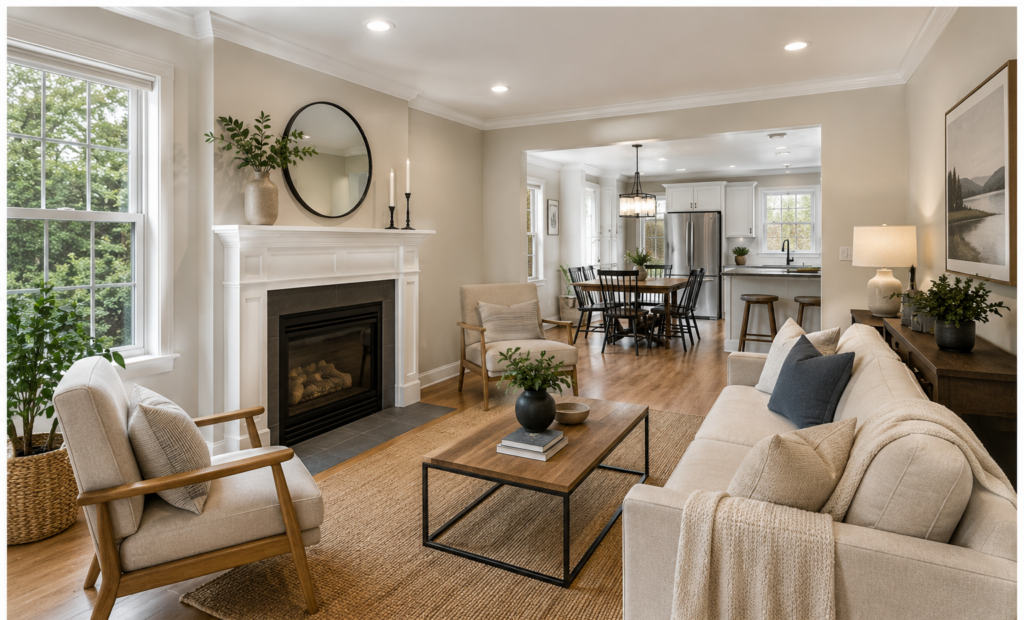
Mistake 4: Treating Photography and Marketing as an Afterthought
Most buyers will encounter the property online before they see it in person.
They may decide whether to schedule a showing based on:
- The first photograph
- The quality and order of the images
- The listing description
- The asking price
- The map location
- The floor plan
- The property details
- The features highlighted in the marketing
Poor presentation can reduce interest before a buyer ever enters the home.
Common marketing mistakes include:
- Dark cellphone photographs
- Poorly composed room images
- Cars blocking the exterior
- Trash cans in the primary image
- Toilet seats left open
- Closed blinds and curtains
- Clutter visible throughout the home
- Several nearly identical photographs
- Missing images of important rooms
- No clear sense of the property’s layout
- A generic description that could apply to any house
Selling a house in New Hampshire often requires explaining features that standard listing fields cannot communicate effectively.
Depending on the property, buyers may care about:
- Lake or beach rights
- Dock access
- Water views
- Private-road arrangements
- Usable acreage
- Outbuildings
- Garage or workshop space
- Proximity to trails
- Recent septic improvements
- Heating systems
- Energy upgrades
- Community amenities
- Seasonal or year-round access
Professional marketing should not make the property look like something it is not. It should present the home accurately, clearly, and in a way that helps the right buyers understand its value.
For more preparation and launch guidance, read our article about how to sell your home fast.
Mistake 5: Making the Home Difficult to Show
Showings are disruptive. Sellers may have work schedules, children, pets, health concerns, or other responsibilities that make access difficult.
Some restrictions are unavoidable. However, every restriction reduces the number of buyers who can realistically see the property.
Common showing obstacles include:
- Requiring excessive advance notice
- Refusing evening appointments
- Blocking most weekend showings
- Frequently canceling appointments
- Leaving pets loose in the home
- Preventing access to the basement, garage, attic, or utility areas
- Remaining inside during the showing
- Following buyers from room to room
A buyer who cannot see the home may not wait for another opportunity. They may simply purchase a competing property.
Before listing, establish a realistic showing plan. This might include:
- Specific showing windows
- A minimum notice period
- Temporary arrangements for pets
- A plan for leaving the home
- Instructions for alarms or unusual access
- A concentrated opening weekend
- Procedures for short-notice requests
Selling a house in New Hampshire does not mean the seller must approve every appointment at any hour. It does mean understanding that convenience and market access are connected.
Mistake 6: Waiting Until After an Offer to Investigate Property Issues
An accepted offer is not the end of the transaction.
Inspections, water tests, septic evaluations, appraisals, title research, insurance reviews, and lender requirements can uncover issues after the property is under agreement.
Common New Hampshire complications include:
- Private-well water quality
- Older septic systems
- Septic malfunctions
- Unpermitted additions
- Missing permits
- Private-road agreements
- Shared-driveway rights
- Underground oil tanks
- Flood zones
- Wet basements
- Aging roofs
- Older electrical systems
- Property-line questions
- Missing dock or shoreland documentation
- Association restrictions
- Unfinished construction
New Hampshire law contains specific notification and disclosure requirements involving private water supplies, private sewage systems, insulation, flood zones, radon, arsenic, lead, and PFAS. Sellers should review the applicable New Hampshire seller disclosure requirements and obtain legal advice when a property or contract issue requires it.
Selling a house in New Hampshire does not mean every seller should order every possible inspection before listing. It means known concerns should be identified early enough to make an informed decision.
Depending on the issue, the seller may decide to:
- Complete a repair
- Obtain a professional estimate
- Gather existing records
- Order an inspection or evaluation
- Disclose the condition
- Adjust the asking price
- Offer an appropriate credit
- Market the property in its current condition
Discovering an issue before listing usually provides more options. Discovering it shortly before closing creates pressure and may weaken the seller’s negotiating position.
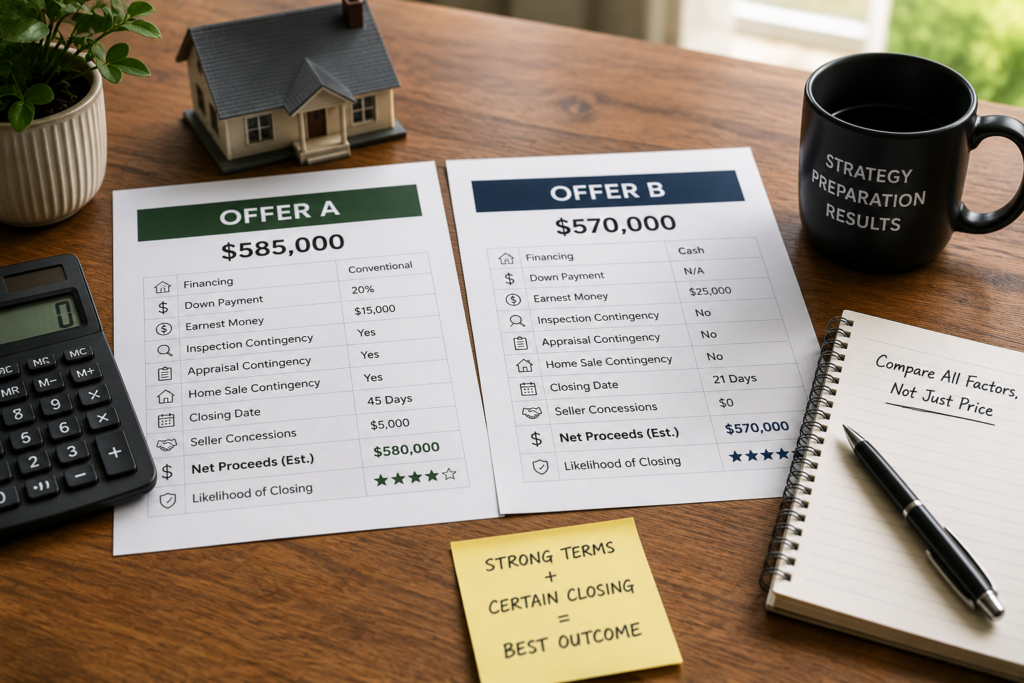
Mistake 7: Choosing an Offer Based Only on Its Price
The highest offer is not always the offer that will produce the highest net proceeds or the greatest likelihood of closing.
When reviewing offers, sellers should consider:
- Offer price
- Financing type
- Down payment
- Deposit amount
- Inspection terms
- Appraisal terms
- Requested concessions
- Home-sale contingencies
- Closing date
- Requested personal property
- Buyer flexibility
- Evidence of funds
- Lender strength
- The buyer’s ability to perform
One buyer may offer more but request substantial closing-cost assistance or include several uncertain contingencies. Another buyer may offer slightly less with stronger financing, cleaner terms, and a more reliable path to closing.
The seller’s priorities also matter.
A seller who needs time to find suitable housing may value flexibility. A seller carrying a vacant property may prioritize certainty and a faster closing. A homeowner coordinating another purchase may need a specific closing timeline.
Selling a house in New Hampshire requires comparing the complete offer, not just the first number on the page.
A careful offer review should consider:
- Probable net proceeds
- Transaction risk
- Contingencies
- Timing
- Buyer qualifications
- Likelihood of closing
New Hampshire Home Seller Checklist
Before placing the property on the market:
- Review recent comparable sales
- Study current competing listings
- Estimate likely net proceeds
- Identify obvious repairs
- Deep clean the home
- Reduce clutter and excess furniture
- Address noticeable odors
- Gather permits and improvement records
- Locate septic and well information
- Review private-road or association documents
- Discuss known property concerns
- Establish a showing plan
- Prepare for professional photography
- Decide how offers will be compared
- Discuss the seller’s next housing plan
A seller does not necessarily need to complete every repair or resolve every issue before listing. The important thing is to make deliberate decisions rather than reacting after buyers identify the problems.
Frequently Asked Questions About Selling a House in New Hampshire
Is 2026 a good time to sell a house in New Hampshire?
New Hampshire continues to have strong buyer demand and limited housing supply, although results vary by town, price range, property condition, and property type. A strong statewide market does not guarantee that every home will sell quickly or at any asking price.
What is the biggest mistake sellers make?
Overpricing is often one of the most damaging mistakes because it affects online attention, showing activity, buyer urgency, and negotiating leverage. Poor preparation and weak marketing can compound the pricing problem.
Should I renovate before selling?
Usually, sellers should begin with necessary maintenance and targeted improvements. A major renovation should only be completed after considering its cost, timeline, likely buyer, and probable effect on the sale.
Can I sell my home in its current condition?
Yes. Homes can be marketed in their current condition, but selling “as-is” does not automatically eliminate disclosure responsibilities or prevent a buyer from conducting inspections. The contract terms determine each party’s rights and obligations.
How early should I prepare before selling a house in New Hampshire?
Ideally, begin the planning process several weeks or months before the desired listing date. Early planning provides time to evaluate pricing, complete worthwhile repairs, gather property records, prepare the home, and create the marketing materials before launch.
Planning on Selling a House in New Hampshire?
The best time to identify pricing, condition, documentation, and preparation issues is before the listing appears online.
Woods & Water Realty can help evaluate:
- Your home’s likely market position
- Which repairs may matter to buyers
- Which projects may not be worth the cost
- How the property compares with current competition
- Potential inspection or documentation concerns
- Likely selling costs and net proceeds
- The timing and marketing strategy for your goals
There is no pressure and no obligation to list. Request a no-pressure property review to better understand your home’s current market position and your options before making a decision.
This article provides general real estate information and is not legal, tax, lending, environmental, insurance, or inspection advice. Requirements and recommended actions depend on the property and transaction. Consult the appropriate licensed professional when needed.