

Selling your home this fall in New Hampshire can make more sense than many homeowners assume. Spring is traditionally the busiest part of the real estate calendar, but that does not mean every seller should automatically wait six months for flowers, warmer weather, and a larger pool of buyers.
As of late summer 2026, New Hampshire REALTORS reported that the July median sale price for single-family homes reached a record $580,000. Closed sales were up 10.4% from a year earlier, pending sales were up 7.2%, and inventory had risen 16% to 2,992 homes. Even with that additional inventory, the state had only 2.7 months of supply, still well short of what is generally considered a balanced market.
At the same time, buyer affordability remains a real constraint. Freddie Mac reported an average 30-year fixed mortgage rate of 6.66% on August 27, 2026. Buyers are active, but many are evaluating price, condition, taxes, and monthly payment carefully.
So should you sell now, or wait until spring? The answer depends less on a rule about seasons and more on your property, your competition, your carrying costs, your next move, and how prepared you are to launch.
If you are already thinking about selling your home, fall is a good time to compare the real financial and practical advantages of listing now against the potential benefit of waiting.
Table of Contents
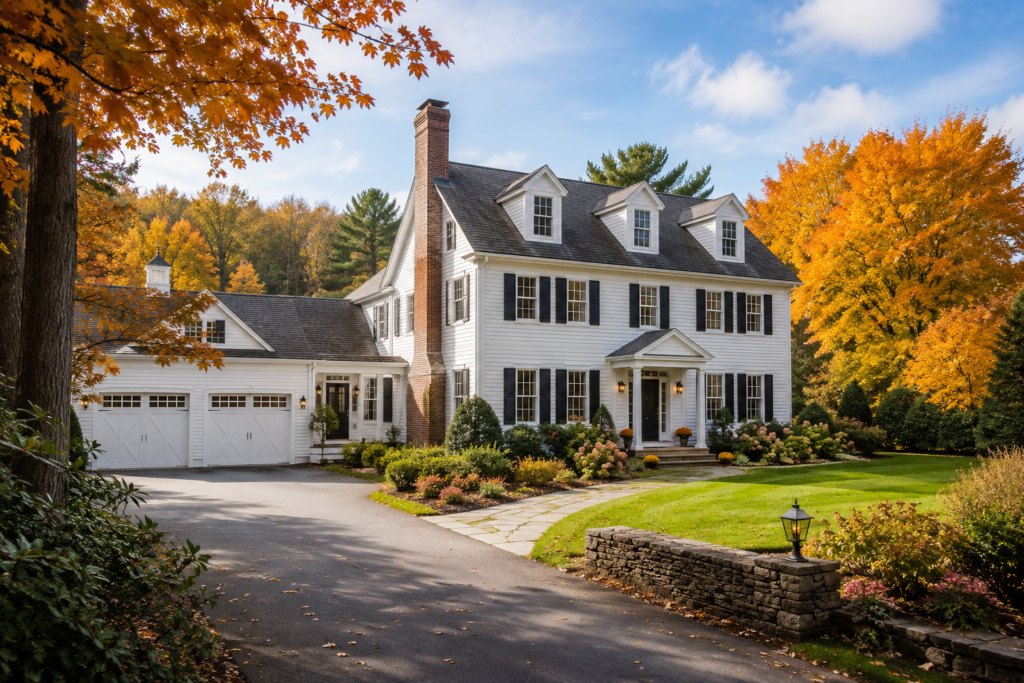
Selling Your Home This Fall: What Changes After Summer?
National Association of REALTORS seasonal research shows a predictable slowdown in activity as the market moves from summer into fall and winter. Homes generally take longer to sell, and fewer buyers and sellers participate than during the peak spring and summer months.
That does not automatically make fall a bad time to sell. A slower market changes the tradeoffs. There may be fewer buyers, but there may also be fewer competing listings. The buyers who remain active may have a concrete reason to move, and a well-positioned property can stand out more clearly when the market is not flooded with new inventory.
In New Hampshire, local conditions matter more than national averages. A well-priced home in a tight price range may still receive strong activity in October, while a specialized property could need more time regardless of season. Waterfront homes, rural properties, condos, multi-family buildings, and homes requiring significant work can each behave differently.
7 Reasons Selling Your Home This Fall May Make Sense
1. You May Face Less Competition From Other Sellers
One of the strongest arguments for selling your home this fall is simple: some homeowners decide to wait. When those listings disappear from the competitive set, the homes that remain can receive more attention from active buyers.
Competition matters because buyers do not evaluate your house in isolation. They compare it with the other homes available in the same price range, town, property type, and general location.
- If five similar homes are available in June, buyers can compare condition and price aggressively.
- If only two comparable homes are available in October, your property may have fewer direct substitutes.
- If your home offers something difficult to replace, such as acreage, a large garage, water access, a first-floor bedroom, or a specific location, lower seasonal inventory can make those features more noticeable.
Less competition does not excuse overpricing. A home still needs to be positioned correctly for the buyers who are active. But waiting for a busier season also means accepting the possibility that substantially more homeowners will list at the same time.
2. The Buyers Who Remain Active May Be Ready to Act
Fall usually brings fewer casual shoppers. People who continue scheduling showings as the days get shorter and the holidays approach often have an actual housing objective rather than simply watching the market.
That does not mean every fall buyer is highly motivated, and sellers should not assume weaker contingencies or automatic bidding wars. It does mean that the quality of activity can matter as much as the raw number of showings.
A seller may prefer eight well-qualified showings that produce a credible offer over twenty-five showings that produce no meaningful interest.
3. Waiting Until Spring Has a Carrying Cost
This is the part of the fall-versus-spring decision that homeowners often overlook. Waiting is not free.
If you postpone a sale for six months, you may continue paying some combination of:
- Mortgage interest
- Property taxes
- Homeowners insurance
- Heating fuel or electricity
- Snow removal
- Maintenance and repairs
- Association fees
- Private-road or plowing costs
- Utilities
- Opportunity cost on equity tied up in the property
For example, if the total cost of carrying a property is $2,500 per month, waiting six months costs roughly $15,000 before considering unexpected repairs or changes in the market. That does not mean listing now is automatically better. It means the expected advantage of waiting should be large enough to justify the cost and risk of owning the property longer.
This is especially important for vacant homes, second homes, inherited properties, or sellers who have already purchased their next property.
4. Fall Can Be One of the Best Times to Show a New Hampshire Property
New Hampshire can photograph exceptionally well in early fall. Green lawns are still visible, trees begin changing color, outdoor areas remain usable, and the property is easier to understand than it may be once snow covers the landscape.
This is especially useful for properties where outdoor features contribute meaningfully to value:
- Large yards
- Acreage
- Stone walls
- Gardens
- Decks and patios
- Pools
- Detached garages and barns
- Trails
- Waterfront or water access
- Long driveways
- Views
If there is even a reasonable chance you will sell during the winter or early spring, have professional exterior photographs taken before the snow arrives. Those images can later supplement current winter photography and help buyers understand features that would otherwise be hidden.
5. Your Next Move May Matter More Than the Selling Season
Many sellers are also buyers. If that describes you, the timing of your next purchase may matter more than whether October historically produces fewer transactions than May. Our guide to buying and selling a home at the same time explains the different ways homeowners can coordinate the two transactions.
Waiting for spring could improve one side of your move while making the other side harder. A stronger spring selling market may also mean more competition when you become a buyer. Conversely, a fall sale may put you in a better position to shop during a period when buyers sometimes have more negotiating room.
The right strategy should evaluate both homes together, not just the property you are selling.
6. Fall Gives You Time to Address Problems Before Winter Makes Them Harder
If you list early enough in the fall, you may still have time to address exterior maintenance before cold weather limits your options.
Examples include:
- Exterior touch-up paint
- Deck or stair repairs
- Gutter cleaning
- Roof maintenance
- Landscaping
- Driveway repairs
- Exterior caulking
- Septic or well access
- Minor drainage corrections
Do not assume that every project is worth completing. If you are deciding whether to spend money before listing, use the same priority order we recommend in our guide to selling a house as-is or making repairs: address damage first, deferred maintenance second, and optional improvements last.
7. The Current New Hampshire Market Still Has Buyer Demand
Seasonality matters, but current supply and demand matter too. As New Hampshire entered the fall of 2026, the market was not starting from a position of excessive inventory.
July had 2.7 months of housing supply statewide, even after inventory increased 16% year over year. Pending sales were also higher than the previous July. That does not guarantee a strong result for every property, but it is an important reminder that ‘fall market’ does not mean ‘no buyers.’
The practical question is not whether buyers exist. It is whether your home is positioned correctly for the buyers who are active in your particular market.
When Waiting Until Spring May Be the Better Choice
There are legitimate reasons to wait. Selling your home this fall is not automatically the right answer simply because you can avoid another winter.
Waiting may make sense when:
- The property requires important repairs that cannot be completed properly before winter.
- Major exterior features are currently difficult to present or access.
- The home is not ready for photography or showings and rushing would create a weak launch.
- Your financial or moving plan is not yet clear.
- You need additional time to organize an estate, title issue, tenant situation, or other transaction concern.
- Your next housing option will not be available for several months.
- The likely carrying cost of waiting is modest compared with the flexibility you gain.
The mistake is not waiting. The mistake is waiting by default without calculating what you gain and what it costs.
Do Not Wait Until Winter to Start Preparing
A seller does not need to put the home on the market immediately just because they begin preparing in September or October. Starting early preserves options.
If you might list later in the fall, during winter, or early next spring, consider doing the following before the weather changes:

- Have exterior and aerial photography completed while landscaping is visible.
- Photograph waterfront, docks, patios, gardens, sheds, barns, and other outdoor features before they are covered or removed for winter.
- Complete exterior maintenance that requires warmer temperatures.
- Gather septic, well, permit, association, private-road, and improvement records.
- Review recent comparable sales and current competition.
- Estimate likely net proceeds.
- Identify which repairs are worth completing and which are not.
- Plan snow removal and safe showing access if the home will be listed during winter.
If the home is ultimately listed in winter, earlier seasonal photos should supplement, not replace, accurate current images. Buyers should still be able to understand the home’s present condition while also seeing what the yard and outdoor features look like without snow.
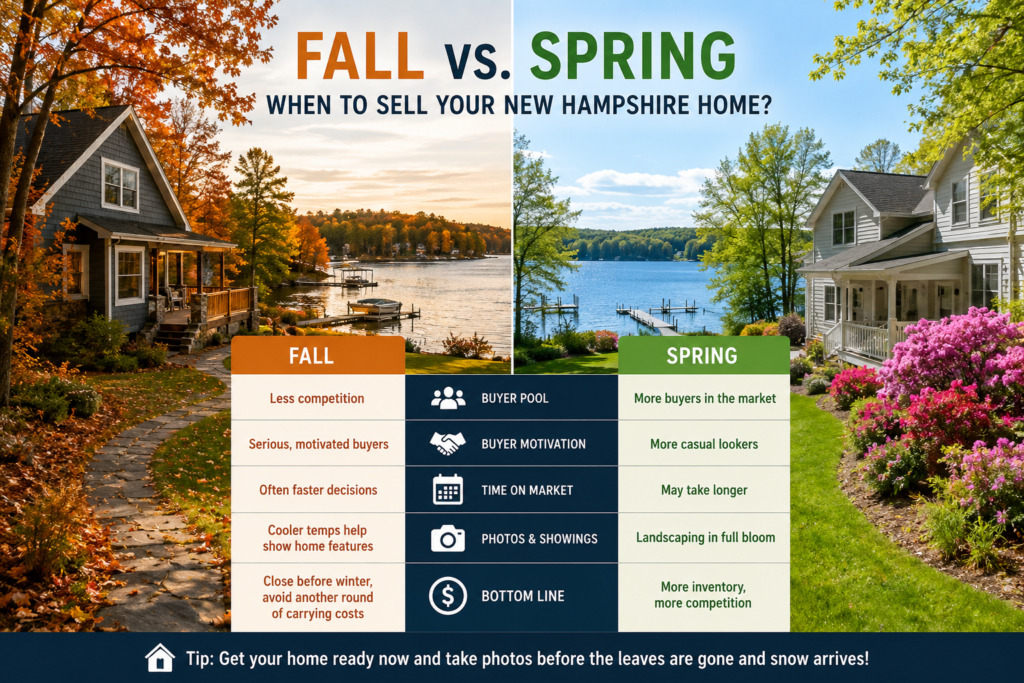
How to Decide Whether to Sell This Fall or Wait Until Spring
Rather than trying to predict which season will produce the highest theoretical price, compare the two scenarios using your actual property and finances.
Ask these questions:
- What would the home likely sell for if listed now?
- What competition is currently on the market?
- How much will I spend carrying the home until spring?
- What repairs or preparation would I complete during that time?
- What would need to change for waiting to improve my net result?
- Would waiting make my next purchase easier or harder?
- Is the property visually stronger in fall, winter, or spring?
- Do I have any exterior features that should be photographed now?
- What happens if mortgage rates, inventory, or buyer demand change while I wait?
No one can guarantee what the market will look like six months from now. The goal is to make a decision that still makes sense even if the future market is different from what you hoped.
Common Mistakes When Selling Your Home This Fall
Seasonal timing does not replace good listing strategy. Many of the same problems we discuss in our guide to costly New Hampshire home-selling mistakes become even more important when the buyer pool is smaller.
- Overpricing because you plan to reduce the price later
- Letting leaves, debris, or dying landscaping hurt the first impression
- Using dark interior photography as daylight hours shorten
- Making showings too restrictive
- Failing to keep walkways and exterior stairs safe
- Allowing the home to feel cold during showings
- Waiting until the first snowstorm to create a winter maintenance plan
- Using only old seasonal photos that no longer represent the property accurately
- Assuming spring will automatically produce a better net result
Frequently Asked Questions About Selling in the Fall
Is fall a bad time to sell a house in New Hampshire?
No. Fall generally has fewer transactions than the spring and summer peak, but New Hampshire market conditions, the property’s price range, competition, condition, and location matter more than the season alone. A properly priced home can still attract strong buyer interest.
Are there fewer buyers in the fall?
Typically, yes. National housing data shows activity declines as the market moves into fall and winter. However, the number of competing listings often declines as well. Sellers should evaluate both sides of that equation.
Should I wait until spring because prices are usually higher?
Not automatically. Seasonal price patterns are influenced by the types of homes sold, inventory, buyer demand, mortgage rates, and local conditions. Even if a spring sale could produce a higher price, the seller should compare that potential difference with the cost of carrying the property for several additional months.
Should I take listing photos before the snow arrives?
Yes, if there is a reasonable chance the home will be listed during winter or early spring. Pre-snow photography can document landscaping, driveways, decks, waterfront, outbuildings, and other features that may later be hidden. If you list in winter, use those photos alongside accurate current images.
When should I contact a Realtor if I might sell in winter or spring?
Earlier than most homeowners think. A planning conversation in fall can identify photography needs, worthwhile repairs, documents to locate, pricing considerations, and a realistic timeline without requiring you to list immediately.
Thinking About Selling Your Home This Fall?
You do not have to decide between fall and spring based on a general rule. The better approach is to compare what your property could realistically do now, what waiting would cost, and what would need to improve by spring to make the delay worthwhile.
Woods & Water Realty can help you review the current competition, likely market position, preparation needs, timing, and estimated proceeds. You can also request a custom home valuation if you want a clearer starting point before making a decision.
There is no pressure to list. The goal is simply to understand your options early enough that the weather and calendar do not make the decision for you.
This article provides general real estate information and is not legal, tax, lending, insurance, or inspection advice. Market conditions vary by location, price range, property type, and time.